
National Fair Housing Alliance and Urban Institute Launch New Fair Housing Data Mapping Tool to Expand Access to Critical Housing Data
WASHINGTON, D.C. – The National Fair Housing Alliance® (NFHA™), in collaboration with the Urban Institute, today announced the launch of the Fair Housing Data Mapping Tool, a new resource designed to equip policymakers, advocates, and community stakeholders with comprehensive, accessible data to advance fair and affordable housing efforts nationwide. Where a family lives shapes nearly every aspect of their lives — from the schools their children attend to the jobs they can access, the air they breathe, and how long they live. As the nation’s fair and affordable housing crisis deepens, local leaders need timely and reliable data to make informed decisions and allocate resources for maximum impact.
The Fair Housing Data Mapping Tool expands access to critical housing data, providing state, county, and census tract-level information on housing affordability, mortgage lending patterns, housing quality, and demographic characteristics. The tool also integrates opportunity indicators, including school quality, proximity to jobs, transportation access, and environmental conditions, allowing users to understand housing in the full context of community life.
“Data is one of the most powerful tools we have to advance fair housing and expand opportunity for all,” said Nikitra Bailey, Executive Vice President of the National Fair Housing Alliance. “As we commemorate Fair Housing Month, and at a time when critical public data sources are being removed or restricted, this tool ensures that advocates, local leaders, and everyday people have what they need to identify where housing discrimination persists, where investment is needed, and how to build resilient, well-resourced communities where everyone can thrive.”
“This data mapping tool is one of many ways to make data more usable and actionable,” said Rekha Balu, Vice President at the Urban Institute. “We encourage advocates and local leaders to let us know how they use data to inform policy and planning.”
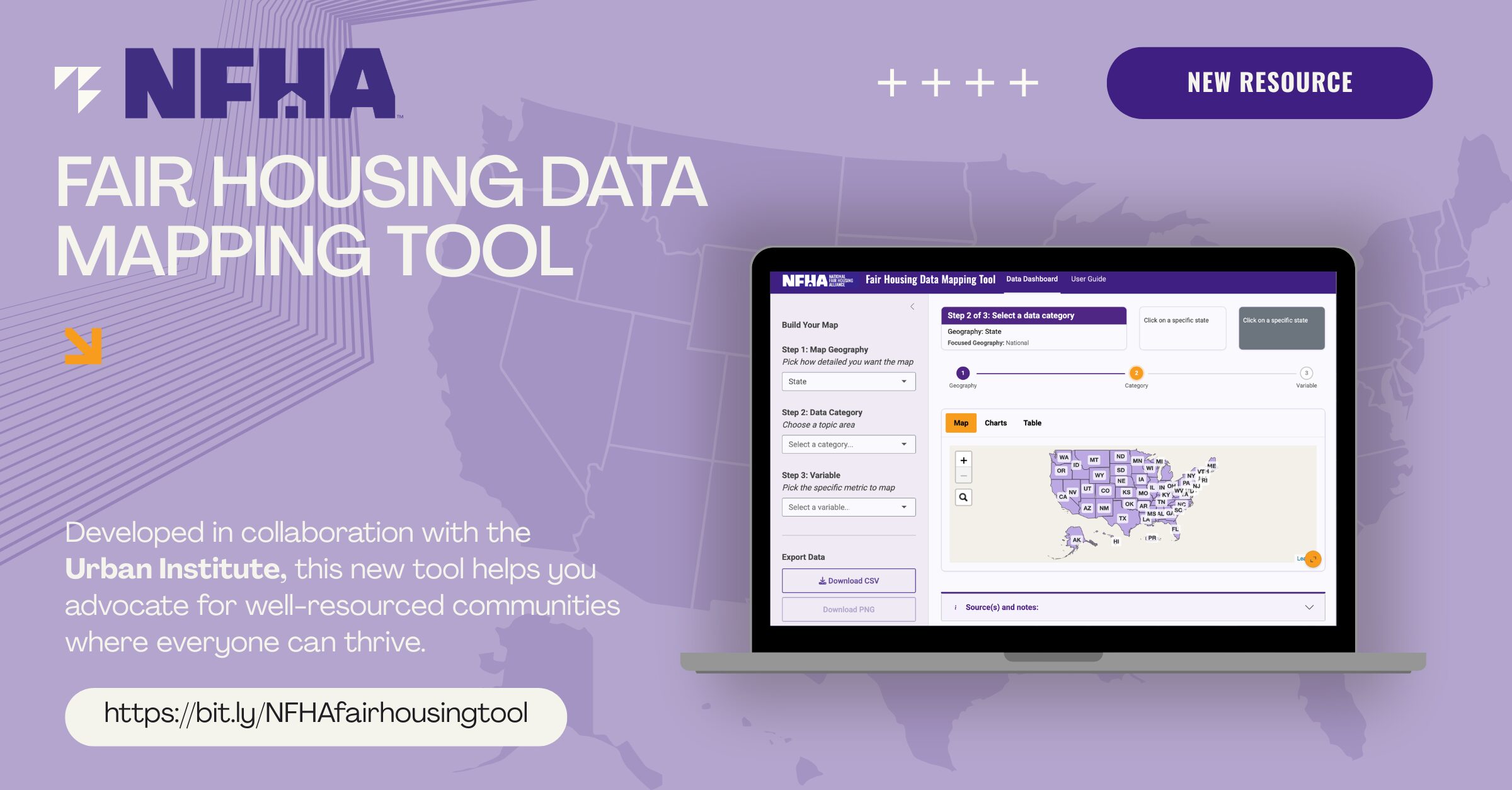
The tool is designed to support the full arc of fair housing planning and advocacy. The tool allows you to identify where housing challenges are most acute, track trends over time, build community consensus around shared data, and measure the impact of investments and policy changes. Key features include:
- Interactive Mapping and Trend Analysis: Tools to examine patterns across geography, population groups, and trends over time.
- Extensive Housing Data: Metrics on housing affordability, cost burden, housing quality, tenure, and mortgage applications and denials.
- Community and Demographic Indicators: Data on poverty, disability, and population characteristics to help assess community needs.
- Opportunity and Access Insights: Information on school quality, access to jobs, transportation, and environmental conditions.
Access the Fair Housing Data Mapping Tool to explore the data behind the housing crisis in your community and take informed action toward a more equitable future.
###
The National Fair Housing Alliance leads a coalition of organizations and individuals that works to end housing discrimination, expand equitable opportunities, and build inclusive, well-resourced, and resilient communities where people can thrive.